

Every golfer makes mistakes. The difference between improving and staying stuck is knowing which mistakes you're making - and having a simple plan to fix them. Here are the most common errors we see at every level, with practical fixes you can use on your very next round.
1. Gripping Too Tight
This is the single most common mistake in amateur golf. When you grip the club too tightly, your forearms tense up, your wrists lose mobility, and your swing becomes rigid and slow.
How to Fix It
Hold the club firmly enough that it won't fly out of your hands, but loosely enough that someone could pull it away with a gentle tug. On a scale of 1–10, aim for a 4 or 5. Think of it like holding a tube of toothpaste without squeezing any out.
You'll notice an immediate difference in clubhead speed and how the ball comes off the face.
2. Over-Swinging
The urge to hit the ball as far as possible leads most amateurs to swing too hard. The result? Poor contact, inconsistency, and - ironically - less distance.
How to Fix It
Try this drill: hit 10 balls at what feels like 70% effort. You'll probably find they go just as far as your full swings, but straighter and more consistently. That's your new "full" swing.
The best ball-strikers in the world rarely look like they're swinging hard. They're swinging smoothly.
A controlled 7-iron that finds the fairway is worth far more than a monster drive that ends up in the trees.
3. Poor Alignment
You could have a perfect swing and still miss every shot if you're aimed in the wrong direction. Most amateurs think they're aiming at the target - but they're actually pointing 10–20 yards right of it.
How to Fix It
At the driving range, lay a club on the ground pointing at your target. Stand behind the ball and check - you'll likely be surprised how far off your natural alignment is.
On the course, pick a spot 1–2 feet ahead of the ball on your target line (a leaf, a divot, a discoloured patch of grass) and aim at that. It's much easier to align to something close than something 200 yards away.
4. Neglecting the Short Game
Most amateurs spend 90% of their practice time hitting drivers and long irons, but around 60% of shots in a typical round happen within 100 yards of the green. Chipping, pitching, and putting are where scores are really made.
How to Fix It
Flip your practice ratio. Spend most of your warm-up time on the putting green and chipping area. Even 15 minutes of focused short game practice before a round will knock strokes off your score.
If you only have 30 minutes to practise, spend 20 on putting and chipping and 10 hitting full shots.
5. No Pre-Shot Routine
Watch any professional and you'll notice they do exactly the same thing before every shot - a practice swing, a look at the target, a waggle, whatever works for them. Most amateurs just walk up and hit.
How to Fix It
Develop a simple, repeatable routine:
- Stand behind the ball and pick your target
- Take one practice swing to feel the shot
- Set up to the ball
- One last look at the target
- Swing
The whole thing should take 15–20 seconds. The point isn't superstition - it's giving your brain a consistent trigger that says "it's time to hit."
6. Trying to Copy the Pros
Watching golf on TV is brilliant, but trying to replicate what you see is a trap. Tour players have spent decades building their swings. What works for Rory McIlroy probably won't work for you - and that's completely fine.
How to Fix It
Work with your body, not against it. If you can't turn your hips like a 25-year-old tour player, don't force it. A shorter, controlled backswing that you can repeat is infinitely better than an overextended one you can't.
A single lesson with a PGA professional will identify the changes that'll make the biggest difference to your game specifically.
7. Ignoring the Mental Game
Golf is played between the ears more than people realise. Getting angry after a bad shot, dwelling on mistakes, or thinking about your score mid-round are all guaranteed ways to play worse.
How to Fix It
- One-shot memory - after each shot, give yourself 10 seconds to react, then move on. The next shot is a fresh start.
- Process over outcome - focus on your routine and your target, not on what might go wrong.
- Accept bad shots - even professionals hit bad shots regularly. The difference is they don't let one bad shot become three.
The best round of golf you'll ever play won't be the one where every shot is perfect - it'll be the one where you recovered well from the bad ones.
The Bottom Line
None of these fixes require expensive equipment, extreme fitness, or hundreds of hours on the range. They're simple adjustments that any golfer can make - and they'll improve your game more than a new driver ever will.
Want professional help identifying what's holding your game back? Browse PGA lessons and coaching experiences at swyng.co.uk.
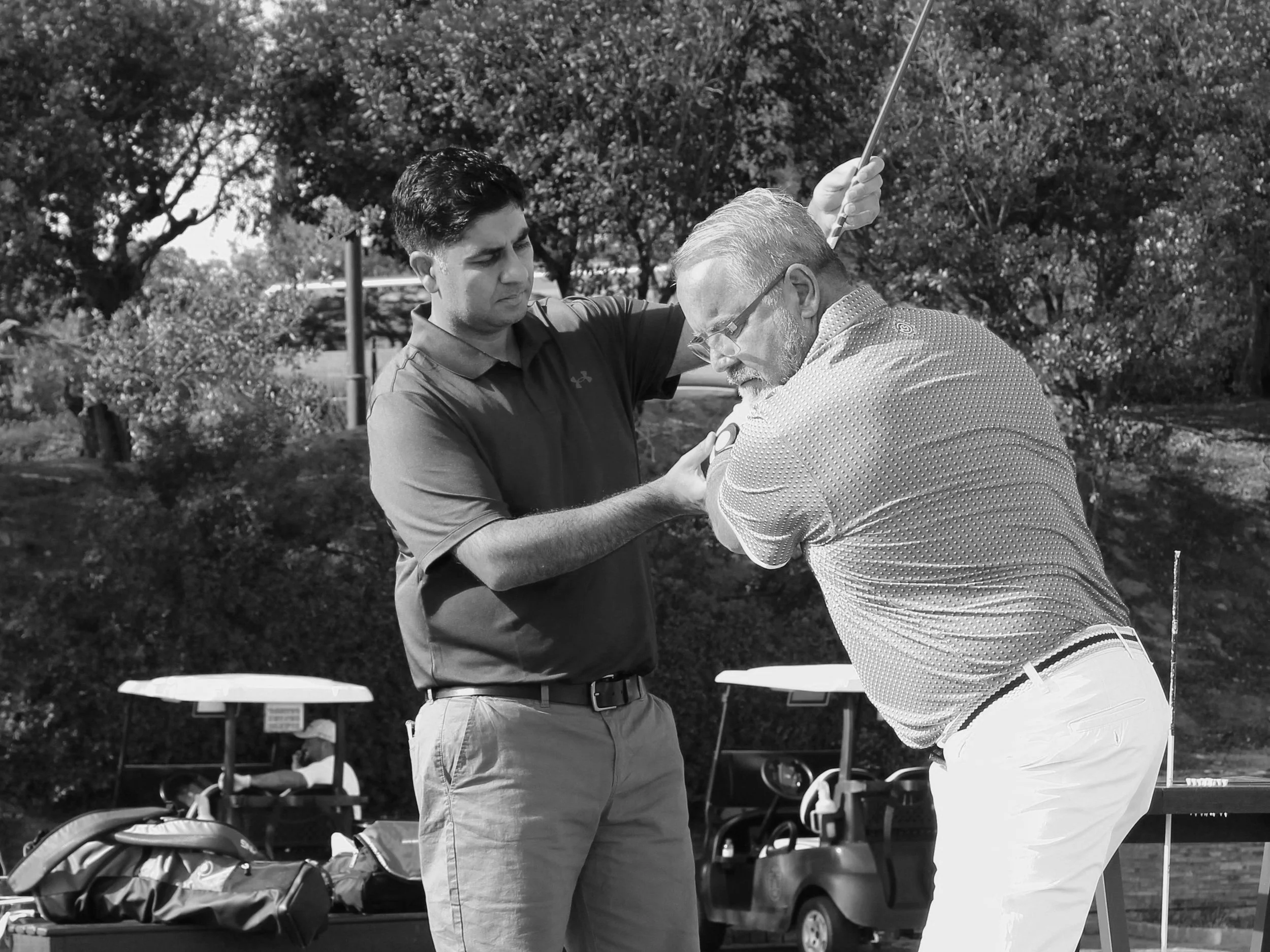
Founder & Tour Professional
Sandeep Grewal is a former tour professional and the founder of Swyng. He personally handles every booking and redemption, using his competitive background to match you with the right course, lesson, or experience. About Sandeep →